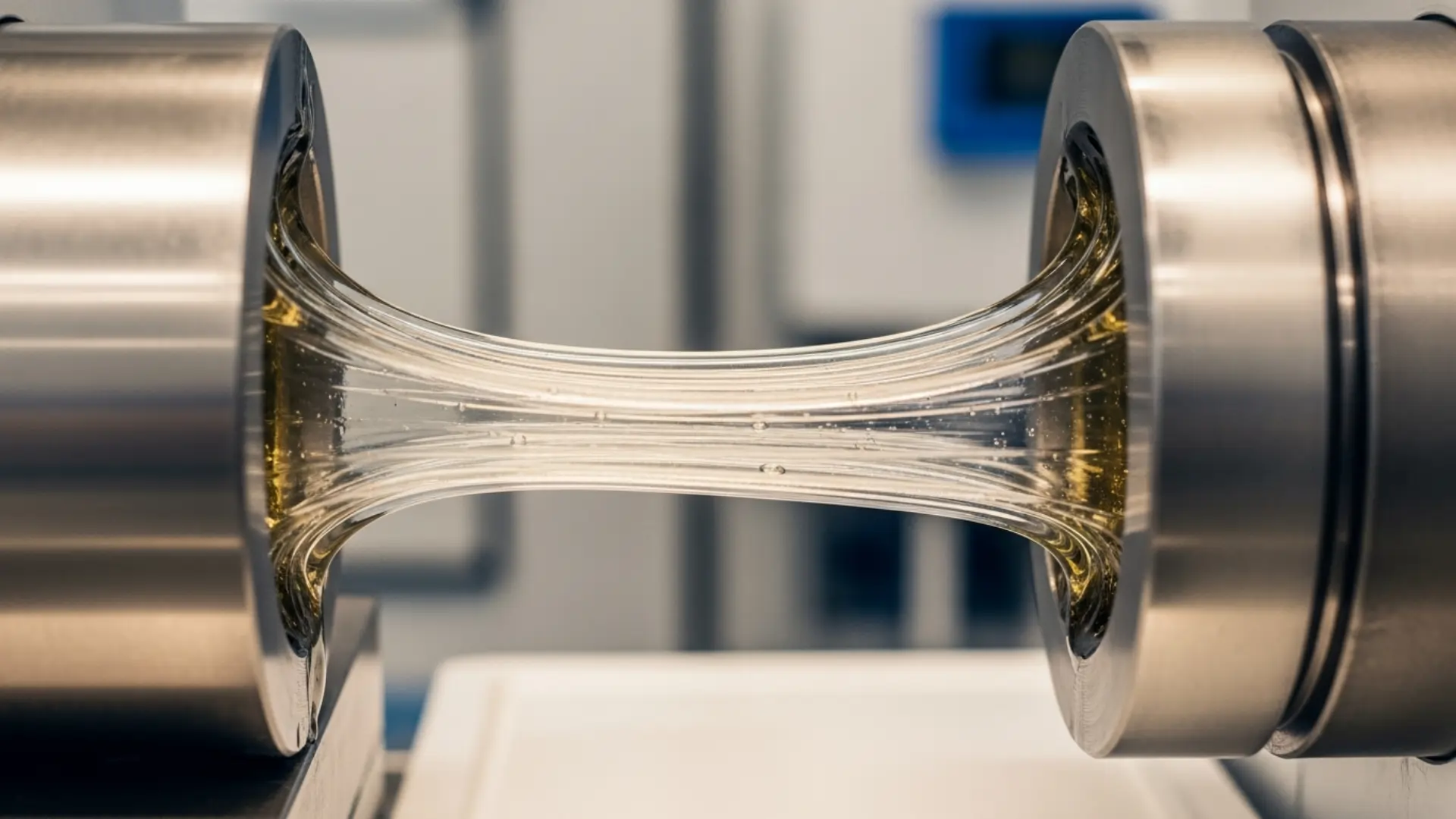
In many industrial processes, “measuring viscosity” is discussed as though it were a single concept, when in fact there are different approaches, technologies and levels of analysis. Choosing incorrectly between a viscometer, a rheometer or an in-line measurement system can produce unrepresentative data and lead to poor decisions.
A viscometer. measures a fluid’s resistance to flow under controlled conditions. It is ideal when the product exhibits relatively stable, Newtonian behavior or when quick, repeatable laboratory checks are required. Its strengths are simplicity, repeatability and ease of comparison between batches.
The rheometer, by contrast, goes a step further. It measures not only viscosity but also how the material’s behavior changes under different stresses, shear rates or deformation conditions. This is essential for non-Newtonian products such as creams, gels, suspensions or complex foods. When a viscometer falls short of explaining problems with application, pumping or sensory perception, a rheometer is usually the right tool.
Meanwhile, in-line viscosity measurement addresses a different need: controlling the process in real time. Unlike laboratory testing, the objective here is not to characterize the material in depth but to detect deviations while the product is being manufactured. This enables immediate adjustments, reduced rework and greater consistency.
Each technology answers different questions:
- Does my product meet a specification? → Viscometer.
- Why does it behave differently during application or pumping? → Rheometer.
- How can I prevent variations during production? → In-line measurement.
A common mistake is trying to solve every problem with a single instrument. In practice, many plants combine laboratory testing with process measurement to achieve control and a deeper understanding.
At Biolabor, technical guidance focuses first on understanding the process rather than selling an instrument. This avoids unnecessary investments and ensures that measurement is truly useful.