For years, many industries have relied exclusively on the laboratory to verify product quality. However, today’s market demands more: consistency, efficiency and reduced waste. This is where process control becomes just as important as measurements taken at specific points in time
The laboratory provides accurate data but typically works with samples taken at specific times. Between measurements, the process can drift without anyone noticing. Variables such as temperature, mixing speed, concentration or equipment wear directly affect critical properties such as viscosity and texture.
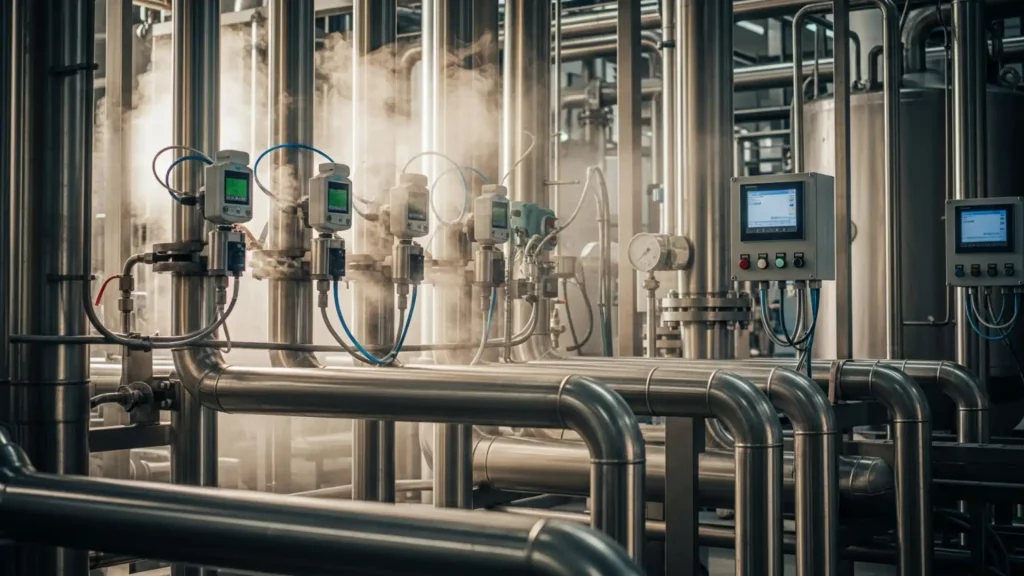
The process control aims to bridge that gap. Measuring key variables in real time makes it possible to detect trends, anticipate failures and act before the product falls outside specifications. This complements laboratory testing rather than replacing it.
A typical example is food or coatings production. Two batches may meet the final specification yet behave very differently during processing, affecting efficiency, energy consumption or production time.
Integrating laboratory testing with process control enables:
- Reduced rework.
- Less raw material waste.
- Greater consistency between batches.
- Improved traceability and documentation.
Implementing process control does not necessarily require complex automation. In many cases, choosing the right measurement point and a suitable sensor delivers immediate improvements.
Biolabor provides solutions that enable this gradual integration, tailored to the actual conditions of each plant without imposing unnecessary additional costs.